

Case presentation
Stef (a pseudonym) was a 53-year-old lady with a 6-year history of type 2 diabetes.
Medication: Metformin 1 g twice daily, linagliptin 5 mg once daily, atorvastatin 20 mg once daily, losartan 100 mg once daily, dapagliflozin 10 mg once daily.
Recent results: HbA1c 68 mmol/mol (8.4%); normal renal and liver function; BMI 30.7 kg/m2.
Diabetes complications: Background diabetic retinopathy.
Social and family history: 8 units alcohol per week, non-smoker; no family history of diabetes.
Dapagliflozin 10 mg once daily had recently been added to her treatment regimen and appeared to be having a beneficial impact on glycaemic control and weight loss.
Stef attended her GP surgery with symptoms of dysuria, urinary frequency, nausea and vomiting, and malaise. Abdominal examination revealed suprapubic discomfort and mild left loin tenderness.
Urine dipstick testing was consistent with a urinary tract infection but also identified the presence of urinary ketones. Capillary glucose and ketone levels were 11.2 mmol/L and 4.9 mmol/L, respectively.
In further discussion, Stef revealed that she had adopted a low-carbohydrate diet.
How would you interpret Stef’s clinical picture?
Introduction
The use of SGLT2 inhibitors (canagliflozin, dapagliflozin, empagliflozin, ertugliflozin) in primary care has expanded rapidly in recent years. In addition to their effectiveness in improving glucose control, these agents facilitate weight loss, provide cardiorenal benefits and carry a low risk of hypoglycaemia. They are now recommended as part of the initial glucose-lowering medication regimen in the majority of people with type 2 diabetes by the NICE (2026) NG28 guideline.
SGLT2 inhibitor side-effects to contend with include predisposition to genital fungal infections and, to a lesser extent, urinary tract infections, and volume depletion symptoms. Rarer but more serious problems include a possible increased risk of foot ulceration and associated lower limb amputation, Fournier’s gangrene and diabetic ketoacidosis (DKA). With increased use of SGLT2 inhibitors, we are likely to encounter such issues, including DKA, more often in primary care settings.
Case analysis
Stef’s use of an SGLT2 inhibitor confers a predisposition to diabetic ketoacidosis (DKA), and her low-carbohydrate diet shifts the metabolic balance further in favour of ketosis. Against this background, the onset of a urinary tract infection (UTI) that may be heading in the direction of pyelonephritis appears to have triggered an episode of DKA.
The association of DKA with use of SGLT2 inhibitors
An early review by the European Medicines Agency (2016) identified DKA as a rare but serious adverse reaction occurring in around 1 in 1000 users of SGLT2 inhibitors. This risk is highest in the early months of treatment and significantly more likely to occur if SGLT2 inhibitors are used off-licence in people with type 1 rather than type 2 diabetes (Musso et al, 2020). The incidence of DKA in people with type 2 diabetes using SGLT2 inhibitors has been reported at 0.5 per 1000 person-years (Chow et al, 2023).
An important feature of DKA associated with SGLT2 inhibitor use is that it can occur at mildly elevated blood glucose levels (<14 mmol/L) compared to classical DKA presentations (Musso et al, 2020). When this happens, it is referred to as euglycaemic DKA; this accounts for around two-thirds of cases of DKA linked to SGLT2 inhibitor use.
Mechanisms
The circumstances leading to DKA arise when there is a relative deficiency of insulin (an absolute deficiency in the case of type 1 diabetes) and an excess of glucagon. This hormonal environment impedes the use of glucose as a fuel and triggers conversion of triglycerides to free fatty acids (FFAs). Metabolism of FFAs generates ketone molecules, which could be an alternative energy source to glucose (Musso et al, 2020).
SGLT2 inhibitors shift the pancreatic hormone balance in favour of glucagon relative to insulin, in part by directly stimulating glucagon secretion from pancreatic alpha-cells (Konstantinos and Trakatelli). The reduction in glucose levels by SGLT2 inhibitors will itself reduce insulin secretion and promote glucagon secretion. In addition, the osmotic diuresis that results from the glycosuria generated by SGLT2 inhibitors stimulates production of glucagon, further activating lipolysis and ketogenesis.
Other counter-regulatory hormones to insulin, such as cortisol, are also implicated in increasing the risk of DKA in people using SGLT2 inhibitors.
Predisposing factors
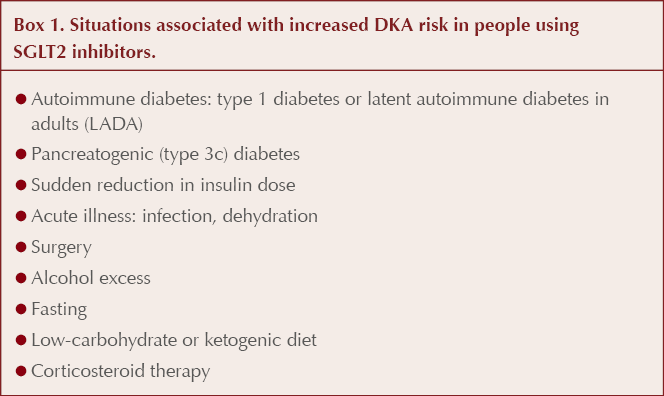
Situations that predispose to DKA in people using SGLT2 inhibitors are listed Box 1. They include reductions in available insulin (endogenous or exogenous), increased insulin requirements and increased glucagon production (Brown, 2023; Morris, 2022).
What people using SGLT2 inhibitors should know about risk of DKA
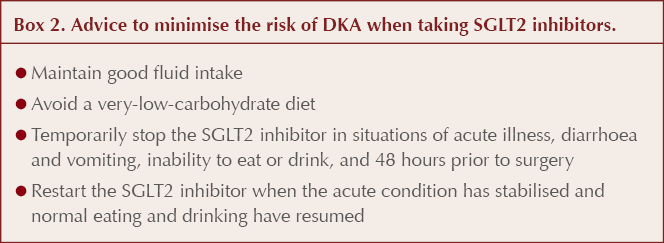
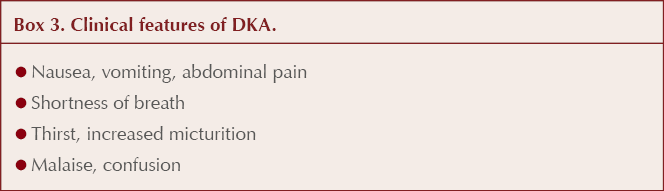
People using SGLT2 inhibitors should be made aware of behaviours that will reduce the risk of DKA, including sick day rules (see Box 2) (GPnotebook, 2024). They should also be aware of the symptoms that might suggest DKA (see Box 3) and be advised that glucose levels may not be unduly elevated.
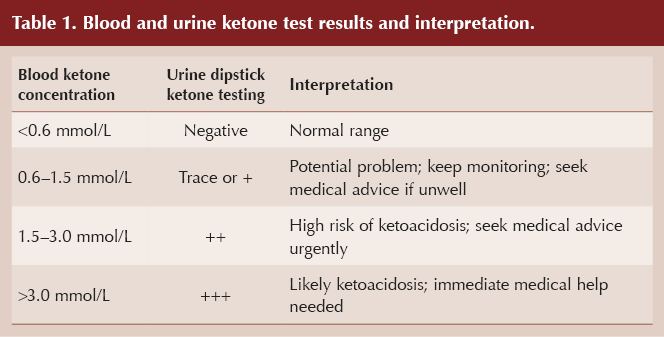
If DKA is suspected, the SGLT2 inhibitor should be stopped immediately and medical advice sought. Ketone testing is crucial – preferably fingerprick testing rather than urine testing, as this is more contemporaneous and more accurate; see Table 1 (Morris, 2022).
Case outcome
Stef was admitted to hospital, where a diagnosis of DKA was confirmed and managed with intravenous fluids and insulin. The urinary tract infection was treated with antibiotics and dapagliflozin was discontinued.
Islet cell autoantibodies were tested and returned negative, and a C-peptide level indicated adequate insulin reserve – making underlying autoimmune diabetes very unlikely.
Although avoidance of a low-carbohydrate diet and institution of sick day rules when necessary would mitigate against recurrence of SGLT2 inhibitor-induced DKA, Stef decided that recommencing an SGLT2 inhibitor would place her at too high a risk of DKA. She was subsequently commenced on injections of the dual GIP/GLP-1 receptor agonist tirzepatide, with simultaneous discontinuation of linagliptin.
| Article learning points |
| ● Diabetic ketoacidosis (DKA) is a rare but serious problem associated with the use of SGLT2 inhibitors. ● Ketoacidosis secondary to use of SGLT2 inhibitors commonly occurs with only mildly elevated blood glucose levels (<14 mmol/L). ● People adhering to a low-carbohydrate or ketogenic diet, or consuming large quantities of alcohol, are unsuitable for SGLT2 inhibitors because of the increased risk of DKA. ● To minimise the risk of DKA when using SGLT2 inhibitors, advise individuals to maintain a good fluid intake, avoid a low-carbohydrate diet, and temporarily suspend the SGLT2 inhibitor in situations of acute illness or prior to surgery. ● People using SGLT2 inhibitors should be aware of the symptoms of DKA and the need to seek medical help if this is suspected, even if blood glucose levels are not unduly raised. ● Ketone testing, preferably capillary, is crucial to the diagnosis of DKA. ● Avoid use of SGLT2 inhibitors in people with low insulin reserve, including those with type 1 diabetes, latent autoimmune diabetes in adults (LADA) or pancreatogenic diabetes – all of whom are at increased risk of DKA. |



Guest Editor Hannah Beba asks which outcomes – beyond mere numbers – are most important to the individual, the clinician and the NHS.
7 Jul 2026