This site is intended for healthcare professionals only

Issue:

Share this article

How to initiate and support continuous glucose monitoring

Nicola Milne
An essential overview of CGM in adults with diabetes for healthcare professionals working within primary care.

Share this article

What and why

Update August 2026: In an ever-changing landscape, this article has been updated to reflect changes in continuous glucose monitoring (CGM) sensors and DVLA driving recommendations.

A growing evidence base highlights that CGM improves time in range (TIR) and quality of life, and reduces admissions for severe hypoglycaemia and diabetic ketoacidosis.1–3

Since 2022, CGM eligibility has widened to include people whose diabetes reviews may be delivered entirely in primary care. Clinicians should enable timely, appropriate access to help reduce inequity and health inequalities.

For optimal use, CGM needs to be accompanied by relevant education, data interpretation and effective insulin management.

This guide gives an essential overview of CGM in adults with diabetes for healthcare professionals working within primary care and signposts to more detailed educational resources.

What is continuous glucose monitoring (CGM)?

Both real-time CGM (rtCGM) and intermittently scanned CGM (isCGM) are methods of measuring glucose levels via interstitial fluid (fluid between cells), without the need for routine fingerprick capillary blood glucose testing.

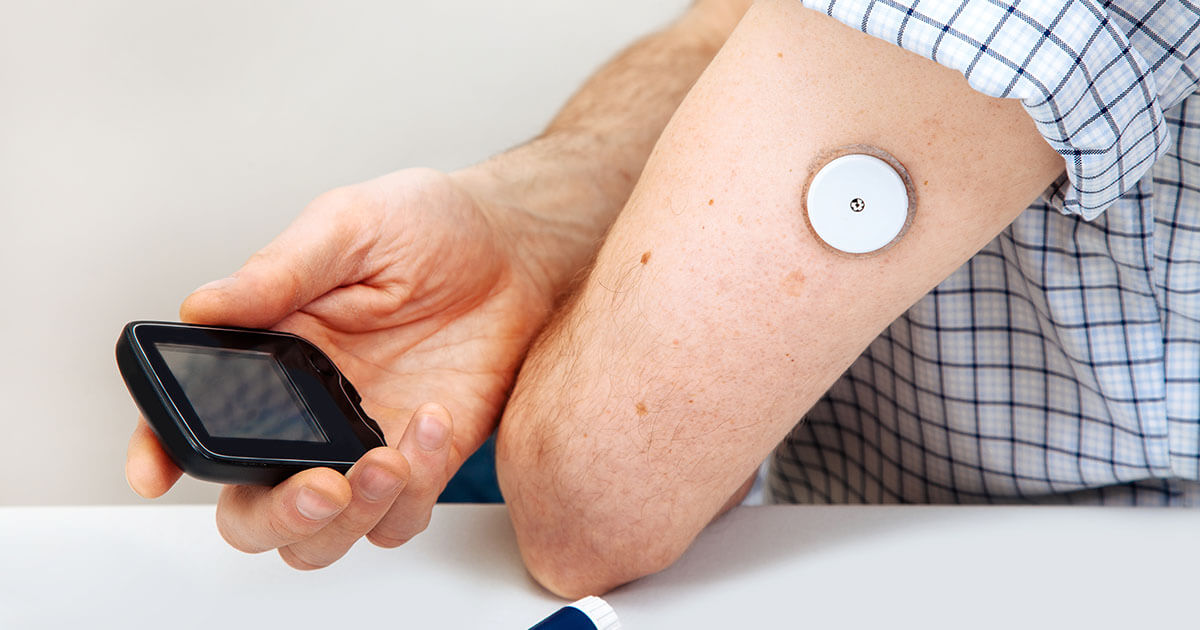
rtCGM records glucose levels continuously throughout the day and night, providing both real-time and predictive glucose data. A small sensor is worn, usually on the arm or abdomen, which inputs interstitial glucose data via Bluetooth to the wearer’s smart device.

People who are unable to link their sensor to a smart device need to use a reader and scan their sensor manually (isCGM). To obtain sufficient data for a complete glucose profile, the sensor must be scanned at least every 8 hours, although data is enhanced with more than six scans a day.

There are various CGM systems available, some of which work with insulin pumps or enable closed-loop systems, and which are only available, in the NHS supply chain, through specialist secondary care services.

It is important to be aware of your local commissioning arrangements detailing which specific CGM devices are available for use within primary care.

Although several other CGM devices are available on FP10, this guide focuses primarily on the FreeStyle Libre 2 Plus and Dexcom ONE+, as these are more commonly available to primary care. See Table 1 for specifications.

Potential benefits

● Reduction in fingerprick testing.

● Trend arrows can aid safe and effective adjustments in treatment to avoid hypo- and hyperglycaemia.

● Alarms can be set and individualised to alert the user to potential hypo- and hyperglycaemic events.

● Patterns in glucose variation can be identified.

● Easier and less invasive identification of night-time hypoglycaemia.

● Can enhance self-management and user engagement.

● Carers and parents can access readings and data.

● Generates a full 24-hour glycaemic picture (for isCGM, sensor must be scanned at least every 8 hours to achieve this).

● Studies show increased time in glucose target range, and potentially improved HbA1c, reducing the risk of long-term diabetes complications.1

● Positive impact on quality of life.1

● Data can be uploaded to share online with healthcare professionals through compatible systems (subject to local data-sharing agreements), enabling potentially more effective consultations and remote reviews.

● Studies in people with type 1 diabetes show cost-effectiveness compared with fingerprick testing.1,3

● Larger text displays and spoken glucose readings are possible for those with visual impairment.

Possible disadvantages

● Data overload can confuse or worry some users.

● Interstitial fluid glucose lags behind blood glucose; thus, a fingerprick capillary glucose test is required in periods of rapidly changing glucose levels or where symptoms do not match readings.

● Possible sensor problems relating to skin irritation or adhesive failure.

● Compression lows: physical pressure on the sensor during sleep can restrict fluid flow, triggering false low-glucose alarms.

● Alarm fatigue: frequent or false alerts can disrupt sleep and increase daily stress.

● Wearing of a fixed device can, for some users, cause concerns with body image.

Who is eligible for CGM?

England and Wales (see NICE NG3, NG17, NG18 and NG28 guidelines)4–7

● All adults with type 1 diabetes.

● All children and young people with type 1 diabetes.

● Adults with type 2 diabetes on multiple daily insulin injections, if any of the following apply:

● Adults with insulin-treated type 2 diabetes who would otherwise need help from a care worker or healthcare professional to monitor their blood glucose.

● Children and young people with type 2 diabetes treated with insulin.

● Children and young people with type 2 diabetes not taking insulin, if any of the following apply:

  • They have a need, condition or disability (including a mental health requirement, learning disability or cognitive impairment) that means they cannot monitor their blood glucose by fingerprick testing.
  • They would otherwise be advised to test their blood glucose levels at least eight times per day.
  • They have recurrent or severe low blood glucose levels.

● Consider for pregnant women who are on insulin therapy but do not have type 1 diabetes if:

  • Problematic severe hypoglycaemia (with or without impaired awareness of hypoglycaemia).
  • Unstable blood glucose levels that are causing concern despite efforts to optimise glycaemic control.

Changes in Wales

Previously, Health Technology Wales guidance recommended isCGM for all people with diabetes taking insulin.8 However, at time of writing, this guidance has been withdrawn and clinicians are directed to the NICE guidance.

Pending consultation and a review of cost-effectiveness, expected over summer 2026, healthcare professionals should consult their local clinical leads over which guidance to follow.

Scotland

● Offer adults with type 1 diabetes a choice of CGM based on their individual preferences, needs, characteristics, and the functionality of the devices available.9

● Offer rtCGM to all children and young people with type 1 diabetes, alongside education to support them, their families and their carers to use it.9

● Adults with type 2 diabetes who are on multiple daily insulin injections or insulin pump therapy should have access to flash glucose monitoring.10

● There is no guidance currently on use of CGM in children or young people with type 2 diabetes.10

● Ensure pregnant women with type 1 diabetes have access to CGM; consider CGM for pregnant women with type 2 diabetes.11

● CGM is not routinely recommended in women with gestational diabetes.11

Northern Ireland

CGM is recommended for the following groups:

● People aged ≥16 years with type 1 diabetes, who attend a secondary care clinic.12

● People aged ≥16 years with type 2 diabetes, who attend a secondary care clinic and are on two or more insulin injections per day, and have at least one of:13

  • Recurrent hypoglycaemia or severe hypoglycaemia.
  • Impaired hypoglycaemia awareness.
  • A condition or disability (including a learning disability or cognitive impairment) that means they cannot self-monitor their blood glucose by capillary blood glucose monitoring but could use a CGM device.
  • Would otherwise be advised to self-measure at least 8 times a day.

● People with insulin-treated type 2 diabetes who would otherwise need help from a care worker or healthcare professional to monitor their blood glucose.13

Need to know

Blood glucose versus interstitial fluid

● Blood glucose and interstitial glucose levels are closely related but not identical.

● There can be a 5–10-minute delay in interstitial glucose response to changes in blood glucose.14

● Therefore, in times of rapidly changing blood glucose levels (e.g. after eating or exercise), or when there are symptoms of hypoglycaemia that do no match the glucose level being given, a fingerprick capillary blood glucose measurement is indicated.

CGM accuracy

● CGM accuracy can be assessed using mean absolute relative difference (MARD), which measures the average percentage difference between sensor readings and a laboratory reference.

● Lower MARD means greater accuracy. A value below 10% is widely accepted as the benchmark for an accurate sensor that can guide diabetes treatment without routine fingerprick tests.15

However, there are other metrics which are important to consider in assessing a device. For further information and detailed accuracy evaluation, see Williams et al (2025).16

The DSN Forum maintains an up-to-date comparison chart of GGM devices, available here.17

Capillary blood glucose testing

People using CGM will still need access to capillary blood glucose testing for the following circumstances:

  • In times of rapidly changing glucose levels.
  • When symptoms do not match the sensor reading.
  • In case of CGM system failure.

Note that people with type 1 diabetes will also still need access to a means of testing blood ketones. Devices that are able to continuously monitor both glucose and ketones are on the horizon.18

Driving rules19

Group 2 (bus and lorry) drivers with diabetes are now permitted to use CGM systems to monitor their glucose levels for the purpose of driving. This brings them in line with Group 1 (car and motorcycle) drivers, who have been allowed to use this technology since 2018.

● All CGM users must carry capillary glucose testing equipment as backup. A capillary glucose reading must be taken in the following circumstances:

  • When blood/interstitial glucose is 4.0 mmol/L or below.
  • When symptoms of hypoglycaemia are being experienced.
  • When the CGM system gives a reading that is not consistent with the symptoms being experienced.

● Device alarms should not replace the individual’s own awareness of low glucose symptoms or regular self-checks.

● CGM users must safely pull over and stop the vehicle before verifying readings, operating their device and, if necessary, treating any hypoglycaemia.

Group 2 drivers additionally must: 

● Use a device that is medically approved for non-adjunctive use, meaning it is approved for making insulin treatment decisions based on CGM readings.

● Use CGM at least 70% of the time (preferably >90%), even when not driving.

● Have alarms set at >4.0 mmol/L.

● Attend an examination every 12 months by an independent consultant specialist in diabetes, during which 30 days of data are required to confirm that:

  • The above rules have been followed.
  • Time below range is <10%.

For more information, see How to assess fitness to drive.20

Travel advice

● Take spare equipment.

● Check with individual manufacturers’ guidance on use with airport scanners.

● CGM sensors are safe for use during air travel using Bluetooth. They will still work when a phone is in flight mode.

● Users can swim, shower or bathe:

  • The Dexcom ONE+ sensor is waterproof to 2.4 metres of water for up to 24 hours.
  • The FreeStyle Libre 2 Plus sensor is water-resistant to 1 metre of water for up to 30 minutes.
  • In water, the display device needs to be closer than 6 metres to receive sensor readings.

Disposal

● Used/unused sensor packaging can go in general waste.

● The used applicator and the lid can be screwed back together then placed in a yellow biohazard bag or sharps box of a suitable size.

● The used sensors are not sharps. Once removed, it should be wiped down with disinfectant and then disposed of as electrical waste.

Initiation: Top tips

● Use shared decision-making to identify the most appropriate device.

● Readers and smart devices:

  • Download the device’s compatible mobile app for use with a smart device prior to fitting. Enable “Near Field Communication” (NFC).
  • The app must be within 6 metres of the sensor to receive glucose information.
  • The app is intended to always run and must be left open to receive data.
  • Freestyle Libre 2 Plus will capture and store up to 8 hours of “missed data”.
  • Dexcom ONE+ will capture and store up to 24 hours of “missed data”.
  • If a smart device is not available, arrange for a compatible reader before fitting.

● See manufacturers’ specific guidance on how to apply the sensor: Freestyle Libre 2 Plus | Dexcom ONE+

● Advise on warm-up time (see Table 1).

● Set low and high alarms (refer to individual device user guides) based on the user’s individualised target glycaemic range.

● Signpost the user and/or their family and carers to appropriate education to enable self-management (see Useful resources list).

● Provide information on need for capillary glucose testing, driving rules, etc. (see Need to know section).

● Reduce the quantity of capillary glucose test strips and lancets prescribed.

● Signpost to relevant manufacturers’ customer support services for any sensor/app issues.

● Consider linking to the device’s cloud-based system (depending on local data-sharing guidelines) so that data can be shared from the person’s own account to the healthcare professional’s clinic account, to allow for remote review/consultations.

● Ensure the person understands when the data will be reviewed, and that CGM does not mean a healthcare professional will be viewing/monitoring their data continuously outside of consultations.

● Arrange for timely review/follow-up.

What information/data does CGM provide?

CGM provides multiple data sets and profile graphs. Below are some of the key data, but for more information see Millson and Hammond (2020).21

Time in range22

Time in range (TIR) captures glycaemic variability and quantifies the time a person’s glucose levels are within certain target levels.

Increased TIR reduces the risk of diabetes complications. For example, a 10% increase in TIR can reduce the risk of retinopathy by 64% and risk of microalbuminuria by 40%.23

Time in range targets22

For people with type 1 or type 2 diabetes:

For older people or those at risk of hypoglycaemia:

Data review: Top tips

● Ask for permission to view the data.

● Respect the person’s data and avoid negative language.

● Validate the data by ensuring:

  • The correct date range.
  • There are at least 14 days of data.
  • Sensor has been active >70% of the time.

● Reinforce positive achievements before focusing on areas for review.

● Look at time below range (TBR) and look to mitigate any hypoglycaemia.

● Next, look at time above range (TAR) and look to mitigate any hyperglycaemia.

● Finally, look at glycaemic variability. The target is <36%.

● If there are multiple areas of concern, look to address one area at a time, with hypoglycaemia always the priority.

● Make any necessary lifestyle and/or therapy adjustments with shared decision-making.

● Arrange for timely review.

Common issues

Common issues causing glycaemic variability and/or reduced TIR include:

  • Limited sensor glucose data (insufficient isCGM scanning).
  • Unsuitable TIR targets.
  • Inappropriate alarm/alert settings.
  • Incorrect timing of insulin.
  • Incorrect dose of insulin.
  • Under-reacting to glucose levels.
  • Overcorrection of glucose levels.
  • Overtreating hypoglycaemia.
  • Suboptimal injection technique, including injecting into areas of lipohypertrophy.

For information on appropriate insulin management, see The Six Steps to Insulin Safety e-Learning module.

For information on appropriate injection technique, see How to support best practice injection technique.24

Useful resources

For healthcare professionals:

● PCDO Society CGM e-Learning modules

Diabetes Technology Network

Manufacturers’ resources:

Abbott FreeStyle Libre 2 Plus

Dexcom ONE+

REFERENCES:

1. Wilmot EG, Evans M, Barnard-Kelly K et al (2021) Flash glucose monitoring with the FreeStyle Libre 2 compared with self-monitoring of blood glucose in suboptimally controlled type 1 diabetes: the FLASH-UK randomised controlled trial protocol. BMJ Open 11: e050713

2. Lind M, Polonsky W, Hirsch IB et al (2017) Continuous glucose monitoring vs conventional therapy for glycemic control in adults with type 1 diabetes treated with multiple daily insulin injections: the GOLD randomized clinical trial. JAMA 317: 379–87

3. Wilmot EG, Moore P, Sathyapalan T et al; FreeDM2 study group (2026) Continuous glucose monitoring versus self-monitoring of blood glucose in individuals with type 2 diabetes: A randomised, multicentre, open-label, superiority trial. Lancet Diabetes Endocrinol 14: 463–74

4. NICE (2020) Diabetes in pregnancy: management from preconception to the postnatal period [NG3]. Available at: https://www.nice.org.uk/guidance/ng3

5. NICE (2022) Type 1 diabetes in adults: diagnosis and management [NG17]. Available at: https://www.nice.org.uk/guidance/ng17/

6. NICE (2023) Diabetes (type 1 and type 2) in children and young people: diagnosis and management [NG18]. Available at: https://www.nice.org.uk/guidance/ng18

7. NICE (2026) Type 2 diabetes in adults: management [NG28]. Available at: https://www.nice.org.uk/guidance/ng28

8. Health Technology Wales (2021) Freestyle Libre flash glucose monitoring for the management of diabetes [Guidance GUI004-2]. Available at: https://bit.ly/4xyFHN9

9. Healthcare Improvement Scotland (2024) Toolkit: Optimising glycaemic control in people with type 1 diabetes (SIGN 170). Available at: https://bit.ly/4vSPnAQ

10. Scottish Health Technologies Group (2018) Advice statement: Freestyle Libre® flash glucose monitoring. Available at: https://bit.ly/4wtr8ut

11. SIGN (2024) Management of diabetes in pregnancy (SIGN 171). Available at: https://bit.ly/44ULHnq

12. HSCNI (2026) Regional N. Ireland pathway for the managed access of glucose sensor monitoring devices for people age ≥16 years living with type 1 diabetes. Available at: https://bit.ly/4pTL5I5

13. HSCNI (2026) Regional N. Ireland pathway for the managed access of glucose sensor monitoring devices for people age ≥16 years living with type 2 diabetes. Available at: https://bit.ly/4pTL5I5

14. Rebrin K, Sheppard NF Jr, Steil GM (2010) Use of subcutaneous interstitial fluid glucose to estimate blood glucose: Revisiting delay and sensor offset. J Diabetes Sci Technol 4: 1087–98

15. Sly B, Taylor J (2023) Blood glucose monitoring devices: Current considerations. Aust Prescr 46: 54–9

16. Williams A, Kelly B, Fletcher-Salt T, Pemberton J (2025) Making sense of sensors: Evaluating CGM devices for safe and personalised insulin management. Journal of Diabetes Nursing 29: JDN378

17. DSN Forum UK (2026) CGM Systems for Insulin Dosing Comparison Charts. Available at: https://bit.ly/4hkSA8U

18. Dhatariya K, Bergenstal RM, Al-Sofiani M et al (2026) Continuous ketone monitoring for people with diabetes: International expert recommendations on the application of a new technology. Lancet Diabetes Endocrinol 14: 82–92

19. DVLA (2025) Assessing fitness to drive: a guide for medical professionals. Available at: https://bit.ly/4dwKY1b

20. Diggle J (2026) How to assess fitness to drive [updated April 2026]. Diabetes & Primary Care 28: 65–8

21. Millson V, Hammond P (2020) How to analyse CGM data: A structured and practical approach. Journal of Diabetes Nursing 24: JDN135

22. Battelino T, Danne T, Bergenstal RM et al (2019) Clinical targets for continuous glucose monitoring data interpretation: recommendations from the International Consensus on Time in Range. Diabetes Care 42: 1593–603

23. Beck RW, Riddlesworth TD, Ruedy K et al; DIAMOND Study Group (2017) Continuous glucose monitoring versus usual care in patients with type 2 diabetes receiving multiple daily insulin injections: a randomized trial. Ann Intern Med 167: 365–74


24. Diggle J (2022) How to support best practice injection technique. Diabetes & Primary Care 24: 185–6

Related content
Conference over coffee: Diabetes and obesity management in multimorbidity and frailty
;
Free for all UK & Ireland healthcare professionals

Sign up to all DiabetesontheNet journals


By clicking ‘Subscribe’, you are agreeing that DiabetesontheNet.com are able to email you periodic newsletters. You may unsubscribe from these at any time. Your info is safe with us and we will never sell or trade your details. For information please review our Privacy Policy.

Are you a healthcare professional? This website is for healthcare professionals only. To continue, please confirm that you are a healthcare professional below.

We use cookies responsibly to ensure that we give you the best experience on our website. If you continue without changing your browser settings, we’ll assume that you are happy to receive all cookies on this website. Read about how we use cookies.