

Cardiovascular disease (CVD) encompasses conditions affecting the heart and circulatory system. Modifiable CVD risk factors include smoking, physical inactivity and unhealthy diet. It is recognised that women are underdiagnosed and undertreated for CVD (Jeemon et al, 2026; World Heart Federation, 2026).
Type 2 diabetes is associated with an increased risk of cardiovascular risk factors, such as raised blood pressure (BP) and dyslipidaemia, as well as cardiovascular outcomes such as coronary heart disease and stroke. The excess risk is higher in women with diabetes than in men (Peters et al, 2015).
Gestational diabetes (GDM) increases the risk of having a baby who is large for gestational age, with a consequent increase in the risk of birth trauma, instrumental delivery and caesarean section (NICE, 2020). It also increases the risk of developing type 2 diabetes in later life, with the reported lifetime risk being up to 60% (Noctor and Dunne, 2015). Furthermore, a history of GDM is associated with adverse cardiovascular outcomes in its own right, with conventional risk factors such as type 2 diabetes, hypertension and dyslipidaemia only partially explaining this association (Lee et al, 2022).
NICE (2020) advises to inform women diagnosed with GDM about the risk of recurrence in future pregnancy. Lifestyle advice should be given (including, where available and eligible, referral to the NHS Diabetes Prevention Programme), and an HbA1c screening test for diabetes should be performed at 6–13 weeks postnatally, and then annually thereafter. This monitoring is important as it may allow prevention of and early intervention for type 2 diabetes and CVD. It also allows for more intensive monitoring during a future pregnancy to minimise the risk of adverse maternal and neonatal morbidity. Although lipid and BP screening are not currently part of NICE guidance for the postpartum annual follow-up of GDM, Daprè (2024) argues that they should be considered. For more information, see How to follow up gestational diabetes.
Despite NICE (2020) recommendations and a Quality and Outcomes Framework indicator to encourage annual monitoring of non-diabetic hyperglycaemia, data suggests that in 2024–25, only 57% of women with a history of GDM received an annual HbA1c measurement, whilst only 52% had BP checks, 45% BMI assessment and 35% cholesterol tests (NHS Digital, 2025). This means opportunities for early detection of modifiable CVD risk factors are being missed.
During pregnancy, a woman is likely to access healthcare more frequently and be more engaged in a proactive, preventative approach (Maas et al, 2021). This means that following a Making Every Contact Count (MECC) methodology towards lifestyle advice may improve both pregnancy outcomes and future CVD risk (Public Health England, 2020).
The present initiative
The aim of this quality improvement initiative was to offer monitoring of glycaemia and comprehensive assessment of modifiable CVD risk factors in women with a history of GDM, to support proactive, preventative care.
The project was carried out in a primary care-based Women’s Health Hub in West Sussex and a Primary Care Network (PCN) in East Sussex. The Women’s Health Hub delivers core services that include assessment and treatment of menstrual problems; menopause assessment and treatment; contraceptive counselling and provision of the full range of contraceptive methods, including long-acting reversible contraception; and cervical screening (Department of Health & Social Care, 2022).
Eligible participants were women with a history of GDM who did not have diabetes and who were not currently pregnant.
Procedure
Women were initially contacted by text messaging. If there was no response or a preference for another communication method was expressed, they received telephone calls or written communications. Telephone and face-to-face consultations were offered.
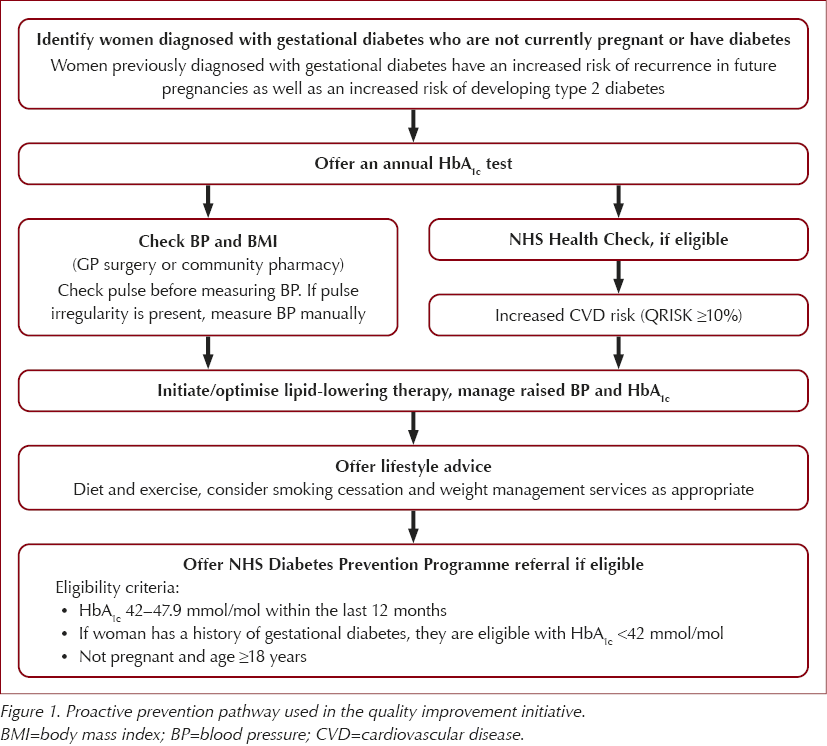
All women were counselled on the diagnosis of GDM and possible implications in relation to future pregnancies and CVD risk, as clinically appropriate. Women were offered HbA1c testing if they had not received this in the last year; further blood tests were requested at the same time if women were eligible for an NHS Health Check (Office for Health Improvement & Disparities, 2022). The cohort was offered BP checks and a BMI assessment. Further monitoring or treatment to target was offered to those with newly diagnosed or suboptimal management of hypertension. Detailed instructions were given on how to monitor BP at home and how and where to escalate concerns. Participants were advised on BP thresholds, and safety-netting advice was given about low or very high BP readings. Lipid-lowering therapy was offered according to NICE (2023) guidance.
All women were given advice on healthy living, including diet and exercise advice. Smoking cessation advice and referral to weight management services were offered if appropriate. All women were offered referral to the Healthier You: National Diabetes Prevention Programme (NHS England, 2023) if they were eligible. Women can self-refer or be referred by General Practice to Healthier You; the approach in the present initiative was refined after a pilot study to offer direct referral to improve uptake, based on feedback. Participants were signposted to additional resources, such as the Diabetes UK Know Your Risk tool, as appropriate.
The project team took responsibility for results and was the point of contact for queries or concerns. Written communication was sent to the participants’ registered GP following verbal advice, if required. During the project, participants were proactively followed up to ensure relevant actions such as treatment to target had taken place, and feedback was sought.
This pathway is summarised in Figure 1.
Results
Women’s Health Hub data
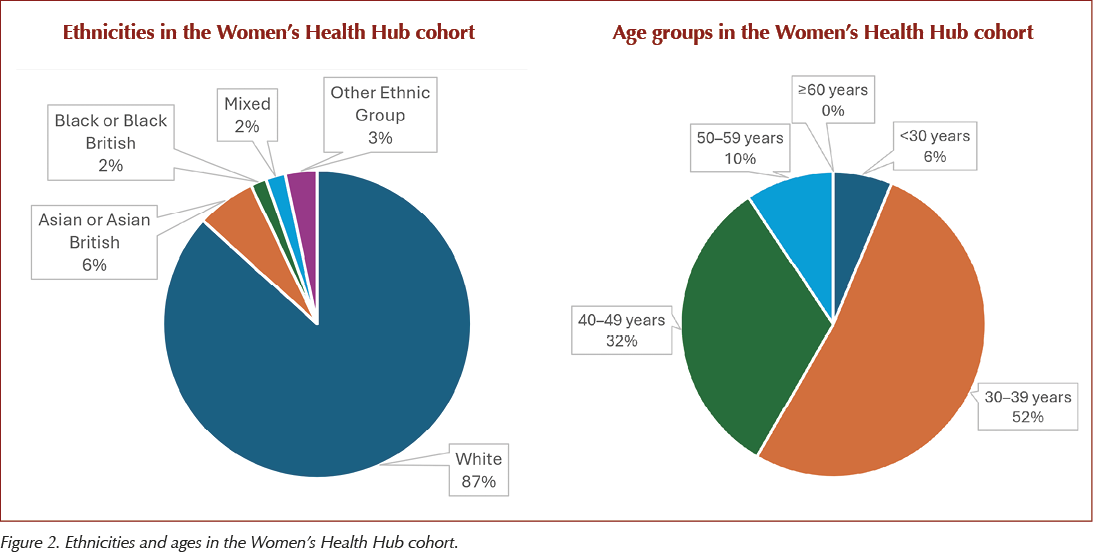
The Women’s Health Hub had a primary care-based population of 14,128 people, of whom 96 women had a previous diagnosis of GDM. All of these women participated in the proposed pathway. Ethnicity data and ages for the cohort are presented in Figure 2.
At start of the project, HbA1c had been recorded in 58 women (60.4%), BMI in 84 (87.5%) and BP in 76 (79.1%). At the end of the project, 100% of these women had all three of these metrics recorded.
No women in this cohort were eligible for lipid-lowering therapy, a reflection of younger age groups having a lower cardiovascular risk. One woman was diagnosed with hypertension and a further 14 had an existing diagnosis; all of these were confirmed as being treated to target by the end of the study.
Thirty-seven women were eligible for an NHS Health Check (38.5% of the cohort). Of these 21 accepted the health check (56.8% of those eligible). Ninety-four women were eligible for referral to the NHS Diabetes Prevention Programme (one was excluded due to pregnancy); of these, 37 accepted referrals to the programme (39.4% of those eligible).
It was noted that eight women were using weight loss injections (tirzepatide, semaglutide and liraglutide), accessed via the private sector.
PCN data
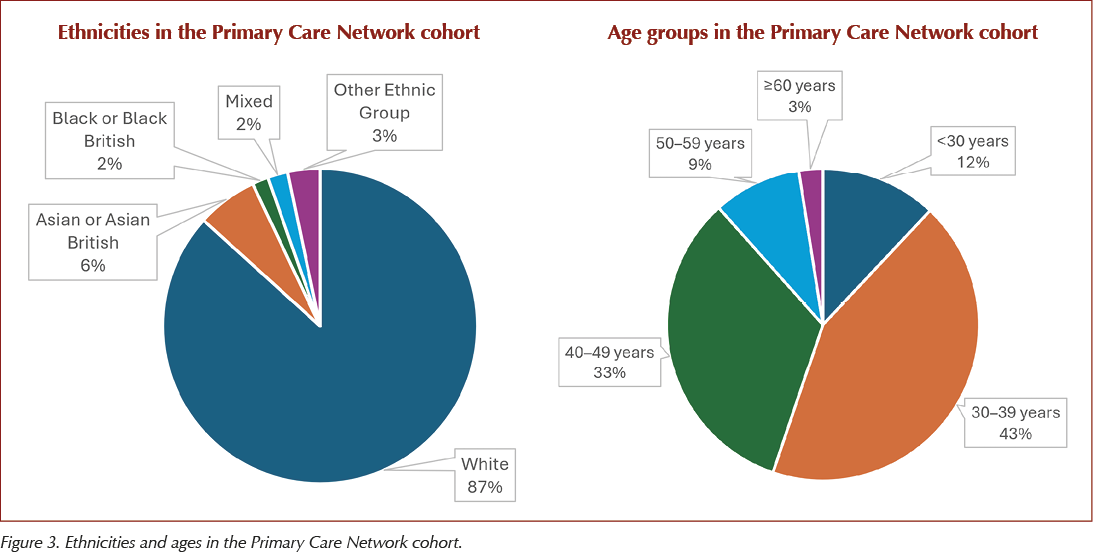
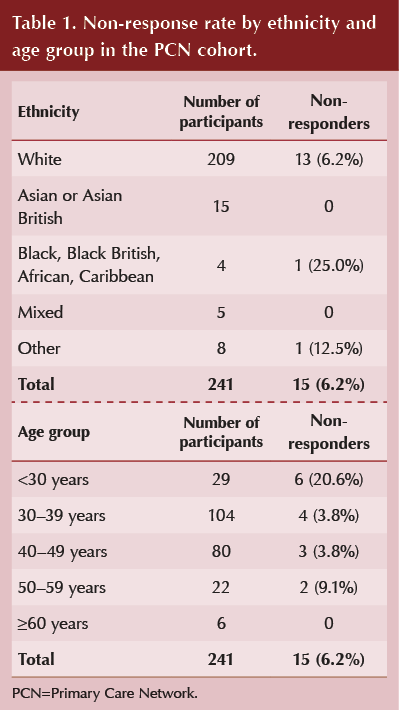
Within the PCN there was a combined GP practice population of 50,113, of whom 256 women were eligible for a GDM review. Of the latter, 15 women (5.8% of the eligible PCN population) did not participate; that is, they did not respond to multiple invitations, including via their preferred method of contact. Ethnicity data and ages for the cohort are presented in Figure 3. Response rates according to ethnicity and age group are presented in Table 1.
At the start of the project, HbA1c was recorded in 124 women (51.5% of the cohort), BMI in 192 (79.7%) and BP in 147 (70.0%). At the end of the project, 100% of these women had all three of these metrics recorded.
No women in the PCN cohort were eligible for lipid-lowering therapy, again a reflection of younger age groups having a lower cardiovascular risk. There were no new diagnoses of hypertension, although 12 women had raised BP readings in clinic which were then normal on home BP monitoring. A further nine women had an existing diagnosis of hypertension, all of whom were confirmed as being treated to target by the end of the study.
Ten women were eligible for an NHS Health Check (4.1% of the cohort), all of whom accepted. A total of 234 women were eligible for referral to the NHS Diabetes Prevention Programme (one was excluded due to pregnancy, two because they were already participating and one because they had developed type 2 diabetes). Of these, 181 accepted referrals to the programme (77.4% of those eligible).
It was noted that 15 women were using weight loss injections accessed in the private sector.
Discussion
The outcome of the initiative was more effective monitoring of GDM. Through appreciative inquiry (Merriel et al, 2022), the outcomes developed further to assessment and management of modifiable CVD risk factors as well as referral for lifestyle advice.
The “vision” of having a proactive approach to women’s heath was welcomed by participants and staff. Data analysis demonstrated strong patient engagement, together with high rates of referral to the NHS Diabetes Prevention Programme and BP measurement and management. Moreover, the team was mindful of weight bias and stigma surrounding lifestyle advice; therefore, person-centredness was key in terms of engagement in proactive preventative healthcare.
Feedback indicated that participants valued the opportunity to discuss proactive healthcare and appreciated scheduled follow-up to review results. Lack of time was cited as a barrier in accessing proactive healthcare, due to family and carer commitments. Therefore, some appointments were scheduled at weekends and in the evenings to support attendance.
It is estimated that over 80% of women do not understand GDM and nearly half feel stigmatised, reporting that healthcare professionals have made assumptions about diet and exercise (King’s College London, 2026). This stigma was corroborated in participant feedback in the pilot study to this project, particularly in relation to weight. It was recognised that this may in turn discourage women to take a proactive approach in relation to GDM monitoring; therefore, person-centredness that was respectful and compassionate was important (NHS England, 2025).
NICE (2020) advises that referral into the NHS Diabetes Prevention Programme should be offered to all women with a history of GDM. However, the first national GDM audit suggests that only 4.5% of eligible cohorts have participated in the programme (NHS Digital, 2025). The overall referral rate of 66% in the present initiative compares favourably to this. Evidence suggests that more than a third of people who participate in the prevention programme experience a risk reduction in the development of type 2 diabetes (NHS England, 2023).
Information was made accessible with signposting to other resources. Text messaging, telephone calls and face-to-face consultations were facilitated to minimise the risk of digital exclusion and to support better communication, within an appropriate social and cultural context where relevant (NHS England, 2025).
The participant survey included details on age and ethnicity. It is known that GDM is disproportionately more common among women from ethnic-minority groups and those experiencing social deprivation (Hedderson et al, 2012). Therefore, completeness of the quality improvement study was evaluated to confirm that there was engagement from groups that may have increased health needs (NHS England, 2025).
The Quality and Outcomes Framework financial incentives may be highlighted to support preventative care. Delivery was either through a Women’s Health Hub or the PCN, using clinical pharmacists and administrative support. This required encouragement to develop collaborative relationships. The pathway was delivered in a primary care setting. Alternative community venues were considered but then discounted due to the need to perform phlebotomy and process samples. Outreach services may be developed but would require additional resources to make this a feasible option. Although translation and interpretation services were not required in this study, some women required additional face-to-face support due to low health literacy.
The study’s success has now been replicated in a further Women’s Health Hub in Sussex. The Women’s Health Strategy references taking a life-course approach and listening to the voices of women, whilst being cognisant of disparities that should be addressed (Department of Health & Social Care, 2022). Moreover, it is consistent with the vision of the NHS 10-year health plan, which proposes a shift from treatment to prevention in the community, with use of digital technology to support communication and links to book appointments (Department of Health & Social Care, 2025).
Conclusions
This pathway aligns with the principles of shared decision-making and supported self-management. The Women’s Health Strategy references taking a life-course approach whilst being cognisant of disparities that should be addressed. The pathway supported a preventative approach to modifiable CVD risk factors and development of type 2 diabetes.
Acknowledgements
The author thanks Agi Dixon and Laura Biddle at Victoria Road Surgery Women’s Health Hub, Worthing; and Sascha Trani and Emma Cornford at Bexhill Primary Care Network, East Sussex.



How target-driven care can perpetuate diabetes stigma, and how targets should be framed, interpreted, discussed and acted upon.
6 Oct 2026