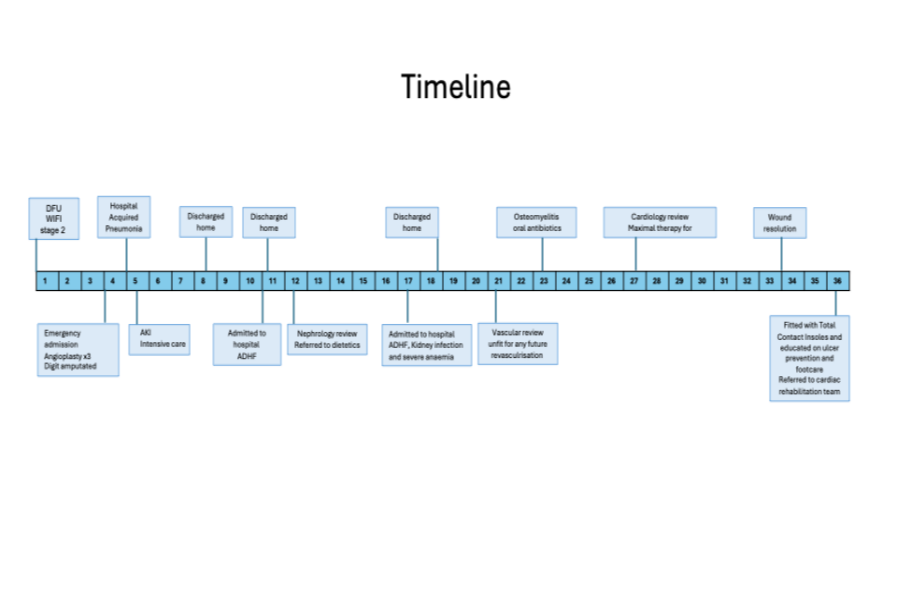
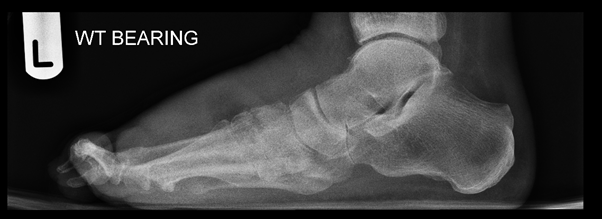
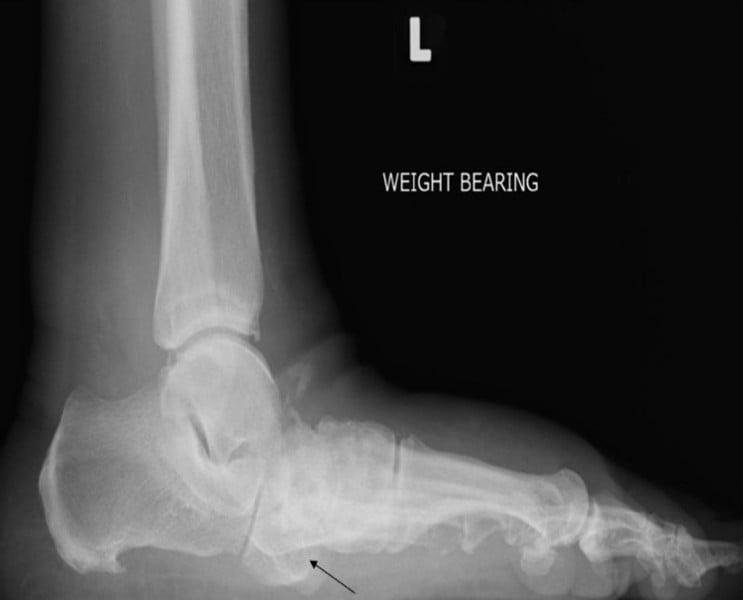
Diabetic foot complications cost the NHS approximately £1 billion annually, a figure projected to rise (Mottolini, 2022). Among these complications, Charcot neuroarthropathy (CN) represents a particularly challenging and frequently misdiagnosed condition (Eisworth and Ferguson, 2022). CN involves progressive destruction of bones, joints, ligaments and tendons in an insensate foot, leading to significant deformity, most notably collapse of the medial longitudinal arch (International Working Group on the Diabetic Foot [IWGDF], 2023). Early recognition is critical, yet the condition remains poorly understood across many clinical settings.
Diabetes is the most common cause of peripheral neuropathy in the UK and is the primary driver in development of CN (Baskozosa et al, 2023). Although the incidence of CN in people with diabetes is traditionally estimated at 0.1–0.4% (Hjelm, 2022), other evidence suggests rates may be far higher, potentially reaching 7.5% (Billello and Jupiter, 2021). This discrepancy is likely attributable to persistent underdiagnosis and clinical difficulty distinguishing CN from other pathologies.
The progressive deformity associated with CN substantially increases plantar pressure, predisposing patients to ulceration, infection, and ultimately amputation (Bansod et al, 2023). Strotman et al (2016) emphasise that CN in the context of diabetes markedly elevates both morbidity and mortality. Early specialist intervention, which includes timely referral to diabetic foot teams (DFTs) and prompt offloading using bespoke casted devices, can preserve foot architecture and reduce the risk of complications (Diacogiorgis et al, 2021). Conversely, delays in diagnosis allow continued weightbearing on a structurally compromised foot, accelerating deformity and increasing the likelihood of infection and limb loss (Wukich et al, 2024). Both the National Institute for Health and Care Excellence (NICE, 2019) and the IWGDF (2023) recommend early MRI imaging and urgent offloading for suspected CN; however, such pathways are inconsistently applied in practice.
A lack of clinical awareness of CN outside specialist DFTs has been highlighted repeatedly in the literature Armstrong and Lavery, 1998; Lomax, 2003; Eisworth and Ferguson, 2023). In practice, patients frequently present with early symptoms ,but receive alternative diagnoses for months or years prior to eventual CN identification (Safavi, 2022). Diagnostic difficulty is compounded by the nonspecific presentation of acute CN – typically a red, hot, swollen foot with no initial radiographic changes (Diacogiorgis et al, 2021). MRI remains the key diagnostic modality in early disease, yet many patients only receive a diagnosis by exclusion after misdiagnoses, such as infection, cellulitis, gout, DVT, trauma, posterior tibial dysfunction or inflammatory arthropathy (Safavi et al, 2021).
The local diabetic foot department (DFD; Royal Blackburn Hospital, East Lancashire Trust, Blackburn, UK) provides specialist multidisciplinary management for both diabetic and non-diabetic CN, incorporating expertise from podiatrists, diabetologists, orthopaedic and vascular surgeons, orthotists and advanced clinical practitioners. Despite this, an internal audit over 12 weeks identified no referrals for suspected CN, and only one confirmed early stage diagnosis within the preceding year, detected in an existing patient already under the care of the department.
The aim of this project is to promote earlier identification and referral of suspected CN to the DFD, ensuring timely off loading in accordance with the Getting It Right First Time (GIRFT) initiative (Duncan and Sayers, 2020). Early intervention is anticipated to reduce ulceration, infection and amputation risk, improving patient outcomes while decreasing financial burden to the Trust.
A suite of educational tools was developed, including a mnemonic-based poster (CAST: Charcot, Altered Foot Shape, Sensory Loss, Time to Refer), an 8-minute awareness video accessible via the Trust SharePoint, and a more in-depth teaching presentation. Mnemonics enhance knowledge retention among clinicians (Hurst et al, 2021), and the CAST framework reinforces both recognition and management of early stage CN.
Method
Design
This quality improvement project adopted a Model for Improvement framework, appropriate because the existing referral pathway for CN was functional but under utilised due to low clinical awareness. The Model for Improvement is a simple, but powerful quality improvement framework built around three fundamental questions and iterative Plan–Do–Study–Act (PDSA) cycles, widely used across healthcare to accelerate effective and measurable change, (Montori et al, 2019). The model allowed rapid testing and refinement of interventions through three PDSA cycles over 12 weeks, enabling timely adjustments to optimise impact (Crowl et al, 2015).
Ethical approval was secured from Manchester Metropolitan University and the NHS Trust, and the project was formally registered.
The DFD has nine podiatrists providing inpatient and outpatient management of acute diabetic foot conditions. Referrals are received from both primary and secondary care via email, Cerner, the departmental “hot foot line” and on-call bleep. All new referrals were logged by administrative staff, generating the weekly dataset for this project.
Intervention development
Three educational tools were designed to improve clinicians’ recognition and referral of suspected CN:
Poster featuring the CAST mnemonic, with QR code to access referral information and education video.
Short educational video (8 minutes) explaining CN presentation, CAST and referral pathways, hosted on the Trust SharePoint.
Extended teaching presentation (40 minutes) covering: CN definition, clinical presentation, aetiology, differential diagnosis, Eichenholtz staging, imaging, management and CAST (Figure 1).
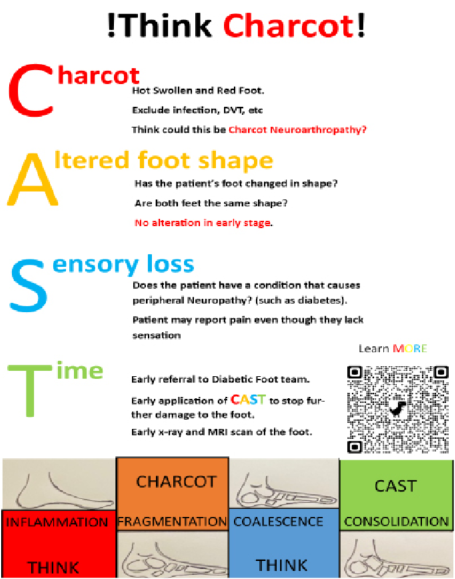
The CAST mnemonic was selected due to evidence supporting mnemonics as effective memory aids in clinical learning (Hurst et al, 2022). A multimodal format was chosen to accommodate different learning preferences. All materials underwent peer review by the diabetic foot lead consultant for clinical accuracy and governance compliance.
Implementation
At project launch, the Trust’s digital communications team issued a Trust-wide bulletin promoting the interventions and directing clinicians to the SharePoint resources. Forty-five laminated posters were displayed in key clinical areas and electronic versions were shared with primary care and community podiatry. Departments identified as likely to encounter early CN (e.g. urgent care, orthopaedics, vascular, diabetes, radiology) were directly contacted and offered extended teaching sessions. Additional sessions were offered to foundation medical trainees and community podiatry teams.
PDSA cycles
PDSA cycle 1
SharePoint engagement peaked immediately following the bulletin (119 views). Education sessions were delivered to orthopaedics and acute medicine, and three CN cases were diagnosed (two early stage). Initial findings suggested greater CN detection compared to the preceding 12 weeks.
PDSA cycle 2
Further sessions were delivered to therapies and ambulatory care departments. SharePoint views decreased (34), and one additional early stage CN was diagnosed. Presentation content was refined based on clinician feedback (e.g. inclusion of normal radiographs for comparison).
PDSA cycle 3
Final teaching sessions were delivered to community podiatry and district nurses (60 attendees; 49 feedback forms returned). SharePoint activity fell to 27 views. Two further CN cases were identified (one early, one late stage). Attendance at therapy led online sessions was low.
Outcome, process and balance measures
The primary outcome was the proportion of accurate new CN referrals, calculated as (positive CN referrals ÷ total CN referrals).
The process measures were:
- Total DFD referrals.
- Number and stage (early/late) of new CN diagnoses, classified using the Eichenholtz system (Rogers et al, 2008).
- SharePoint engagement metrics.
- Number of posters displayed, and points of contact reached.
The balance measures were:
- Clinician knowledge and confidence pre/post teaching.
- Training attendance and completeness of feedback.
- Impact on departmental workload and onward referral.
Results
Referral accuracy and diagnosis
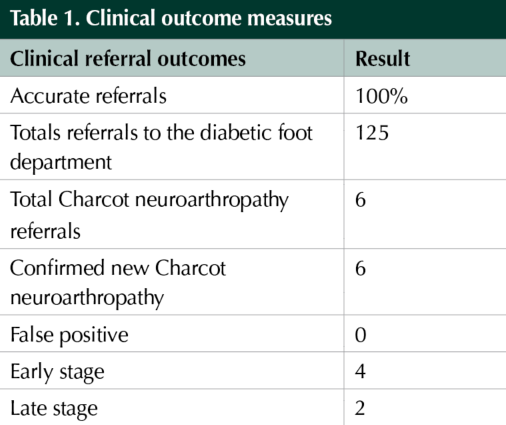
Six new CN cases were identified in the 12-week period, compared with none in the previous 12-week period. Four were diagnosed at early stage, a notable improvement in early recognition. No false-positives occurred, suggesting improved diagnostic accuracy among referrers (Table 1).
Educational impact
The mean scores for pre-training knowledge and confidence were 5.8/10 and 4.7/10 respectively. Post-training scores rose to 9/10 and 8.6/10, indicating significant improvement.
Engagement:
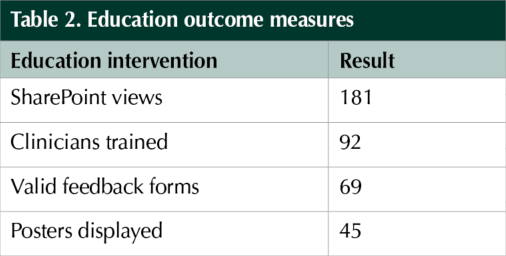
SharePoint content received 181 total views, most within the first 2 weeks following bulletin release. Departments with the highest engagement correlated with increased CN referrals (Table 2).
Workload:
Managing six new CN patients required additional follow-ups and offloading, but no onward referrals or inappropriate escalations were noted.
Discussion
This quality improvement project demonstrated a substantial increase in the number and accuracy of new CN diagnoses following a targeted educational intervention. Prior to the project, no CN cases were identified in the preceding 12-week audit period; however, during the intervention, six new cases were diagnosed, four of which were in the early stage. This represents a meaningful shift, particularly considering that only one early stage case had been identified in the previous 12 months. Although the absolute number is small, the change aligns with emerging evidence suggesting that CN may be more prevalent than traditionally reported. Wukich et al (2024) argue that CN should no longer be considered rare, and the 4.8% prevalence observed among diabetic referrals during this project supports the hypothesis that CN incidence is underestimated, especially in neuropathic populations. While the short duration of the project limits the ability to draw definitive prevalence conclusions, the findings are consistent with studies estimating incidence rates as high as 10% in neuropathic patients (O’Loughlin et al, 2017) and up to 29% in some subgroups (Bilello and Jupiter, 2021).
The most notable increase in diagnoses occurred during the first PDSA cycle, coinciding with the highest engagement with the SharePoint educational resources and the initial Trust-wide bulletin. This temporal association suggests a likely link between the intervention and clinician behaviour change. However, establishing direct causality in quality improvement work is inherently challenging. As Sturmberg and Marcum (2024) highlight, healthcare systems exhibit complex causal pathways where improvements may occur in parallel with unrelated fluctuations. Statistical process control criteria were not met for a true “hift because five consecutive data points above baseline were not achieved (Gupta and Kaplan, 2020). Nonetheless, moving from a baseline of zero to six diagnoses suggests at minimum an important observational change with probable clinical significance.
Clinician engagement within the DFD may also have contributed to the outcome. Participation in developing the educational materials likely heightened diagnostic vigilance among the specialist podiatrists. This aligns with Schmidt (2020), who emphasises that ongoing education enhances diagnostic accuracy even among experienced clinicians. The project revealed unexpected gaps in specialist knowledge, particularly regarding early stage CN – a finding consistent with Bilello and Jupiter (2021), who reported diagnostic uncertainty even within expert centres. Feedback from DFD staff indicated heightened confidence in identifying and escalating suspected cases, which may partially explain the increase in early detection. While this internal effect complicates attribution, it also reinforces the central value of education in improving diagnostic accuracy.
Importantly, zero false positive referrals were recorded. All suspected cases were confirmed radiologically, including early stage presentations diagnosed exclusively via MRI, in line with Diacogiorgis et at (2021), who emphasise that radiographs are often unremarkable in the early stages. The accuracy of referrals suggests that the educational intervention enabled clinicians to differentiate early CN from its many mimics, supporting Olson et al (2019) who argue that knowledge is fundamental to diagnostic precision. That four early stage cases were identified is particularly significant, given long-standing evidence that early CN is frequently missed or misdiagnosed Safavi et al, 2022); Marshall et al (2024).
SharePoint engagement provided insight into staff exposure to the educational material. Initial views were high but declined sharply in later cycles, likely due to the absence of a second bulletin. Only 181 views were recorded overall, and while the number of posters distributed (45) and known contact points (273) was modest, these limited exposures still yielded six confirmed cases. This raises the likelihood that a broader reach through repeated communication, mandatory training, or integration into induction programmes generate even greater impact, consistent with Bilello and Jupiter (2021) view that CN prevalence may be substantially under-recognised.
The long teaching sessions further demonstrated the educational impact of the intervention. Although scheduling difficulties limited participation – particularly among high-value departments. However, knowledge scores increased from an average of <5/10 pre session to 9/10 post session and confidence doubled. This supports Kamalis et al (2021), who argue that multimodal educational strategies enhance learning. The large community training event, with 60 attendees and 49 returned feedback forms, further reinforced the effectiveness of this approach.
Overall, the project strongly suggests that multimodal education, combined with clear diagnostic cues (CAST mnemonic) and accessible resources, improves both awareness and early identification of CN. While causality cannot be definitively established, the uplift in diagnoses – particularly early stage cases – reflects a meaningful positive change. With sustained implementation, broader dissemination and repeated communication, the intervention has the potential to produce long term improvements in CN recognition, earlier offloading, and ultimately reduced morbidity and cost.
Lessons learned
- Scheduling education sessions was difficult within the 12-week window; earlier planning is essential
- Sustained communication (e.g., repeated Trust bulletins) is needed to maintain engagement
- Institutional endorsement could increase uptake in high-turnover departments
- Involving clinical teams in co-developing materials enhanced ownership and confidence.
Sustainability and spread
The CAST mnemonic, short video, and presentation remain accessible on the Trust SharePoint. Future plans include:
- Continuing long-form education sessions across departments.
- Training additional DFD staff to deliver sessions.
- Seeking Trust-wide endorsement to embed CN awareness into annual training.
- Dissemination materials nationally to other Trust and possibly international to continue increase the knowledge and awareness of CN
Conclusion
This project demonstrated clear clinical value, showing that a focused educational intervention can substantially improve the identification and referral of CN. Six new cases were diagnosed during the 12-week intervention period — four of them early stage — compared with none in the preceding audit window. Early-stage detection is particularly significant, as it enables timely offloading and reduces the subsequent risks of deformity, ulceration, infection and amputation. Although the small numbers limit statistical interpretation, the findings align with existing literature suggesting CN is more prevalent and more frequently missed than traditionally assumed.
A key insight from this project was the degree to which limited awareness and low diagnostic confidence among clinicians outside the DFD act as barriers to timely diagnosis. The intervention also revealed knowledge gaps within specialist teams, indicating that ongoing internal education is equally important. The multimodal learning tools – poster, mnemonic, short video and extended teaching session – were well received and led to marked improvements in knowledge and confidence among attendees.
Given the short duration of the project, continuation and expansion are warranted. With formal Trust support, future implementation could include mandatory CN education within departmental training plans, repeated Trust wide communications, integration of the CAST mnemonic into electronic referral systems, and the development of CN elearning modules. Increasing engagement from high impact clinical areas and foundation training programmes could yield even greater diagnostic improvements.
Overall, the educational tools tested here were effective and should be sustained locally and considered for adoption across other Trusts to support earlier CN recognition and improved patient outcomes.