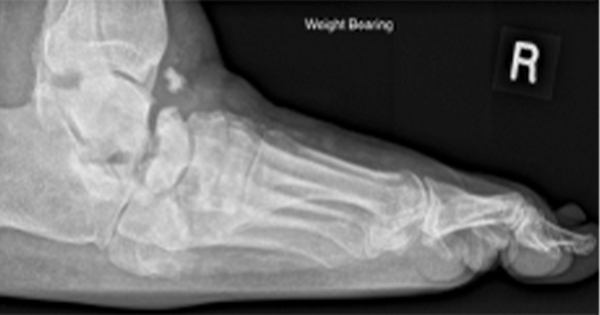

With a 5-year mortality rate of more than 50% in patients with foot ulcers and 80% in patients with an amputation, the mortality associated with diabetic foot ulcers is similar to, or worse than, that of many common cancers (Armstrong et al, 2020).
The economic argument for investing in the prevention and management of diabetic foot disease has been persuasively made (Kerr et al, 2019) and there are now national standards for the treatment of diabetic foot disease (NICE, 2019).
Patients with diabetic foot disease need high level coordination of several key services such as radiology, microbiology, vascular, podiatry and orthotic teams, to minimise the risk of amputation and decrease the hitherto unacceptably high length of stay (NICE, 2019).
All NHS Trusts should have a dedicated multi-disciplinary foot team (MDFT) for the management of diabetic foot complications. The service should ideally be well integrated with the community podiatry service in addition to dialysis units, given the increased risk of amputation for diabetic patients who fall into this cohort.
Previous systematic reviews (Buggy et al, 2017; Albright et al, 2020; Musuuza et al, 2020; Quinlivan et al 2014) have linked MDFTs with reduced amputation rates following a diabetic foot ulcer. The role of the MDFT is to manage diabetic foot problems, in hospital and in the community, that cannot be managed by the foot protection service alone. Furthermore, it is widely recognised that podiatrists play a vital role in the MDFT, providing skilled assessment and care.
The multi-disciplinary foot team (MDFT)
The main focus of the MDFT is on foot ulcers, infection, ischaemia and Charcot neuroarthropathy. The NHS RightCare Pathway for Diabetes (2023) identifies a MDFT service and supporting pathway as a core element of an optimal diabetes service.
The MDFT at Whipps Cross Hospital, UK, has extensive experience in managing diabetic foot disease, offering both inpatient and outpatient care to quickly investigate and treat foot disease. Working in line with NICE (2019) guidance for the diabetic foot, the service includes colleagues from diabetology, podiatry, vascular, orthopaedic, orthoticts, microbiology, interventional radiology, and plaster technicians, who collaborate as needed to
provide expert care to this high-risk patient group.
The emergency department (ED), ambulatory care, out-patient antibiotic therapy (OPAT) and same day emergency care (SDEC) teams are also key stakeholders in the diabetic foot pathway on an ad-hoc basis where required.
Expansion of the MDFT
North-east London was awarded transformation funding from NHS England in 2021, which included provision for a diabetes specialist podiatrist to work at Whipps Cross Hospital. The objectives were to increase in-patient access for diabetic foot ulcers, increase MDFT involvement, provide nursing education, and improve access to podiatry for high-risk patients on renal dialysis.
The podiatrist has close links with the community podiatry team in the London borough of Waltham Forest. This has enabled close working between the acute and community teams, ensuring patients are not lost to follow up on discharge, which has, in turn, helped to prevent hospital readmissions.
Despite having an existing well-established weekly MDFT, we recognised that although we were able to manage the in-patient caseload effectively, there was an increasing demand for specialist MDFT discussion and input for diabetic foot patients who were presenting and being managed in the community.
A decision was made to actively invite referrals from their community podiatry colleagues for any patient they felt would benefit from an MDFT review, or further investigation – such as X-ray, blood tests, further vascular assessment or specialist offloading devices.
Referral criteria
The following broad criteria was set for referrals from the community podiatry team:
- Non healing wound of more than four weeks’ duration which is not improving.
- Any suspected osteomyelitis or deeper infection.
- Any new deterioration.
Community colleagues are encouraged to send in referrals via a shared email account, which is linked to all members of the core MDFT. These referrals are then triaged daily (Monday to Friday) by the specialist podiatrist and added to the list for weekly MDFT discussion if appropriate, or booked for face-to-face review if necessary. The inbox is also used to receive referrals from wards, the ED and SDEC for patients with suspected or confirmed active diabetic foot disease.
In addition to this, patients are also identified via the microbiology team, which can flag any foot related tissue samples or wound swabs coming from the community, for discussion within the MDFT.
Figure 1 demonstrates the various aspects that come together to inform MDFT discussions regarding the individual patient. With effective use of existing technology and electronic record keeping systems, it is possible to gain a holistic view of the patient’s care and provide expert advice and treatment as required.
At the weekly MDFT meeting, both the community and acute record keeping systems are fully accessible. This means that up-to-date progress notes and photographs from the community teams can be reviewed in real time, and test results and diagnostic imaging from the hospital electronic record system are accessible.
We are fortunate to have access to East London patient records, which can reveal what is happening from the primary care perspective, including current prescriptions and recent patient encounters with the GP practice (and district nurse input if relevant).
Patients are discussed and all available information is reviewed. A plan is then made and documented simultaneously on both the hospital and community electronic records so that all care teams are made aware.
Typical plans may include a change in antibiotics, referral to the OPAT team for intra-venous antibiotics, a decision to review the patient in person, a request for further investigations, or a referral to other specialties such as the vascular team or orthotists. There is a dedicated focus on keeping patients well-managed in the community and avoiding hospital admissions during the MDFT meeting
Results
We compared data from October 2020 to September 2021 (baseline data) with data from two subsequent years with additional funding, and then with the period following a re-negotiated service line agreement (SLA). The total number of in-patient and MDFT reviews, including virtual community ones, has increased significantly following the additional funding and expansion of the MDFT as shown in Table 1.
The introduction of virtual MDFT reviews for patients being cared for in the community has been valuable, as many of these patients are able to avoid a hospital admission by virtue of a high-level clinical discussion occurring in an MDFT. This means they can be safely managed outside the hospital with close coordination between the community and hospital foot care teams.
The data clearly demonstrates a significant increase in the volume of patients reviewed in subsequent years following the expansion of the MDFT both within the hospital itself and as virtual reviews for those patients being managed in the community.
The hospital has also seen a gradual reduction in length of stay for admissions < 30 days for patients with a diabetic foot complication, since the introduction of the virtual MDFT as described in Table 2. Again, this is despite a significant increase in the number of patients being reviewed.
Admission avoidance
At discharge across the three years, 63% (n = 250) of patients were referred to either community podiatry or diabetic foot MDT follow up, ensuring that there has been good continuity of care in the community which, in turn, has helped reduce rates of readmission.
Readmission within 30 days has substantially dropped year on year for patients with active diabetic foot disease under our care since the expansion of the MDFT and the increase in funding for podiatry.
In 2023, the funding that we had been allocated for additional podiatry, via the NHS England Diabetes transformation fund, ended. As a result, there was a substantial reduction in funding for podiatry input to support the MDFT over a period of three months, until we were able to secure additional temporary funds.
Data collected during this period is shown in Figure 2. It reveals that the mean length of stay during this three-month period increased by 15% (n = 2.3 days) compared with the same period for the preceding year; there was also a 59% reduction in referrals received.
The mean number of days between referral and review across the three years, since the expansion of our MDFT and increased podiatry input, is 0.96 days, which is in line with NICE guidelines (NICE, 2019) for expert review within 24 hours of referral. The exception to this is the three-month period of reduced funding when the mean increased to 1.6 days.
Conclusion
In actively seeking to increase the number of patients being reviewed, we have significantly increased both the visibility and availability of the MDFT to the diabetes population of Waltham Forest and to the health care professionals looking after them.
This proactive approach to MDFT review for the diabetic foot, aids the early identification of patients who would benefit from a more intense management plan to avoid admission. It also allows us to promptly admit those patients who require more in-depth medical or surgical input.
For patients who are housebound, it has often been the case that their care is managed solely via the GP with limited access to specialist care, as they are unable to travel to the hospital for appointments. By expanding the virtual MDFT, we have improved access to specialist care and reduced health inequalities for those unable to attend the hospital for face-to-face appointments.
This approach also supports admission avoidance which is a key priority across the NHS, as many patients with active diabetic foot disease can avoid a hospital admission by virtue of a high-level clinical discussion within a dedicated MDFT. This means they can be safely managed outside the hospital with close coordination and follow up between the community and hospital foot care teams.
The data that we collected during the period of reduced funding in 2023 demonstrates an immediate and detrimental impact on the diabetic foot service in our hospital and these experiences and data are borne out in the literature (Edmonds et al 1986; Gooday et al, 2013).
In addition to the increased length of stay, we noted a 59% reduction in referrals being received. It was previously noted by Meloni et al (2023) that delayed referral to a MDFT can increase the rate of in-hospital complications, and it is well recognised that patients with impaired health status may have more complications from hospital procedures often required in complex cases, such as surgical foot intervention or revascularisation. For these reasons, early referral to a diabetic foot MDT is considered essential to improve healing, limb salvage and survival rates in this cohort (Meloni et al, 2021).
Podiatry remains a limited and inconsistent resource across many healthcare systems (Blanchette et al, 2020), with challenges in accessibility, funding and scope of practice. While funding for our podiatry service has been temporarily restored, long-term uncertainty persists, posing a serious risk to patient care and threatening to drive up healthcare costs if left unresolved.
The NHS 10-Year Plan focuses on personalised care, a better integration of services and a sharper focus on prevention and early intervention. Our virtual diabetic foot MDT delivers exactly that, offering personalised, holistic care; bridging primary and secondary teams for seamless integration and tackling foot complications early to prevent serious outcomes. This alignment is not accidental; it is foundational.