Welcome to another diabetic foot digest commentary. The study I want to bring to your attention examines foot cleaning and ulcer relapse focusing upon the potential of the skin’s microflora infecting minor breaches leading to diabetic foot ulcer (DFU) formation.
This was a randomised, double-blind, placebo-controlled study conducted on US veterans between January 2019 and January 2023. The aim was to evaluate efficacy of daily foot cleaning using 2% chlorhexidine versus soap-and-water wipes for 1 year on the risk of developing new foot complications (new DFU, infection or amputation). Study eligibility included: diabetes, previous DFU, ambulatory, bipedal, no current foot infection. Exclusion criteria included present infection, active DFU or planned surgery.
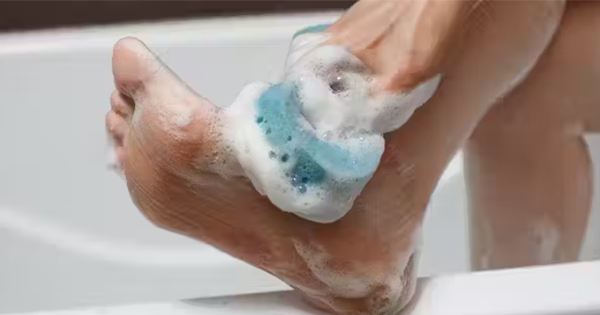
Subjects were randomised to either soap-and-water wipes (control group, CG) or 2% chlorhexidine wipes (chlorhexidine group, ChG) used daily on their feet for 1 year. The wipes were similar in colour, size, shape, thickness, feel, scent and packaging; all study investigators were blind to allocation. Both groups received a moisturiser for post-wipe use. All feet were swabbed 4 weeks after their completion date. The primary outcome was time in days from randomisation to new foot complications. The secondary outcome was chlorhexidine resistance to common DFU pathogens 4 weeks post-study completion.
A total of 175 participants were recruited, with 87 allocated to CG and 88 ChG. There were 170 men (97%); mean age 68 years (± 9 SD); and 67% of subjects were black (n=117), 30% white (n=53) and 3% other( n=5). DFUs occurred in 14% (n=12) in ChG and in 16% (n=14) in CG during the study, with a median (IQR) time of 232 (115–315) days to development of DFU. There was no significant difference between ChG and CG for DFU relapse (hazard ratio 0.83; 95% CI [0.39–1.80]).
Adherence with daily use of foot wipes and moisturising was very good and well tolerated, with 145 participants (83%) applying daily over the study period. The CG foot swabs tested for chlorhexidine presence were negative and for ChG 47% were positive at 4 weeks post completion. Skin colonisation (Staphylococcus aureus, Streptococcus spp, Escherichia coli, Klebsiella pneumoniae, Enterococcus spp, Pseudomonas spp) were seen in both ChG (38%) and CG (40%), with no bacterial resistance to chlorhexidine seen.
The investigators conclude that using the medicated wipes does not impact upon DFU relapse prevention. The rationale for using such wipes is that possibly antiseptic wipes/soap prevent skin flora invading minor cuts etc, which may lead to DFU formation. However, this appears not to be likely in this case. The study does have flaws, notably that the subjects were predominately male and black.
The expected DFU relapse rate was lower than one would expect in both ChG and CG 14% and 16%, but this may be because selection was biased with recruitment of subjects with DFUs within 36 months. It is possible a different outcome may have been seen if subject recruitment was narrowed to within 3 months to 1 year post-healing. Additionally, the impact of daily moisturising could bias the results significantly.